Estimé 300 000 € - 500 000 €
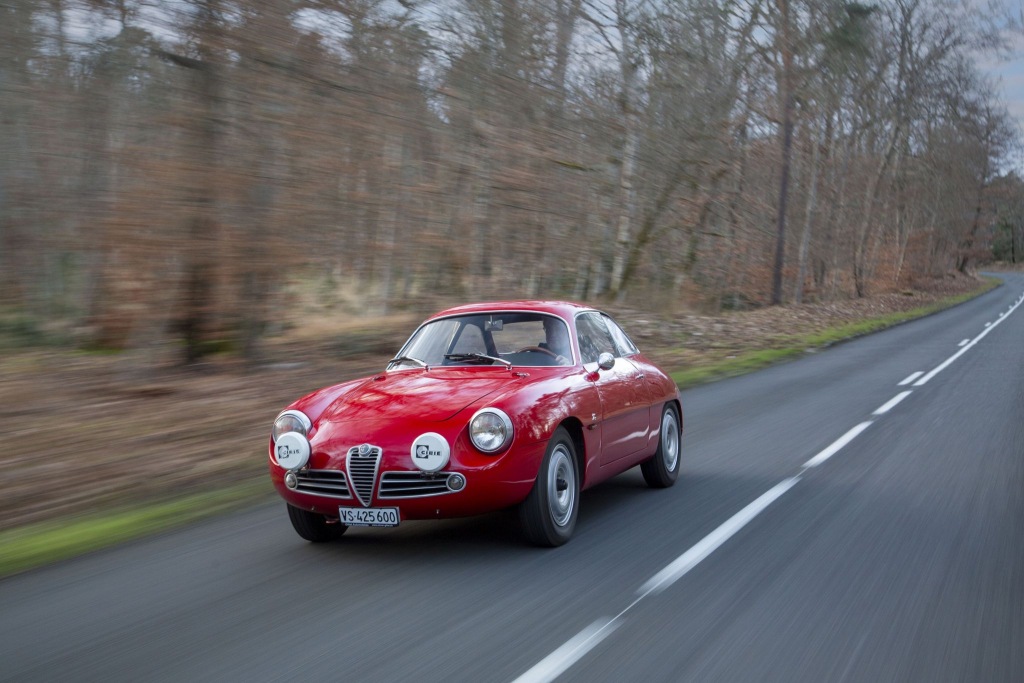
Par OSENAT à Fontainebleau le 21/04/2024 : 1962 ALFA ROMEO GIULIETTA SPRINT ZAGATO « Coda Tonda »
Numéro de série : AR1012600136
Numéro du moteur : 00120 01724
Titre de circulation Suisse
Véhicule en importation temporaire au sein de l’UE
- Victoire à la coupe du salon 1962 en catégorie 1000/1300
- Victorieuse au Tour Auto 1980
- Ex Maurice Sausay et Jean Gonguet
Zagato et Alfa Romeo sont deux noms mythiques de l’automobile !
L’association de ces deux grands génies donnera naissance à des véhicules mythiques.
Stoppée pendant la guerre cette collaboration reprendra dans les années 50 avec la 1900 puis la Giulietta. Base exceptionnelle par la qualité de sa conception, elle permettra aux plus grands carrossiers italiens de montrer l’ampleur de leurs génies.
Après une SVZ réussie, Zagato présente en 1960 la sprint Zagato, réponse du carrossier à la Sprint Spéciale de Bertone. La Sprint Zagato est beaucoup plus sportive que sa concurrente.
Pesant seulement 785 kg pour environ 115 chevaux, la Sprint Zagato sera très vite adoptée par de nombreux pilotes courant de succès en succès grâce notamment à sa vitesse maximale de 200 km/h.
L’exemplaire que nous vous proposons fut livré neuf le 16/02/1962 par la concession d’Aix-les-Bains à Jean Gonguet. Pilote amateur courant notamment pour l’AC Savoie, il participera, en octobre 1962 aux Coupes du Salon, remportant une victoire dans la classe 1000 /1300 cm3 et une honorable huitième place au général.
En avril 1963, la voiture devient la propriété de Bertrand Buisson, il la conservera jusqu’en janvier 1964. Cette année-là, la voiture changera deux fois de mains. En décembre 1964, la voiture est acquise par Monsieur Fernandez, il ne la revendra qu’en juillet 1968.
La voiture est alors acquise par Bruno Celice, amateur résidant à Paris, il profitera de sa belle Alfa-Romeo jusqu’en avril 1979.
La voiture est alors vendue par Hervé Poulain dans sa fameuse vente Art et Automobile au Palais des Congrès sous le lot 276. Lors de cette vente, la voiture devient propriété de Maurice Sausay.
Grand pilote et pionnier du VHC, Sausay participera à de nombreux évènement avec cette automobile. Toujours aussi efficace, la SZ remportera le Tour Auto 1980, puis la même année le rallye du Mont Blanc.
En 1981, Jean pierre Mondonnet fait l’acquisition de cette automobile, il participera à de nombreux évènements à son volant, remportant une honorable 3e place au championnat de VHC 1984.
Fin 1985, la SZ est acquise par François Melcion, Directeur Historique du Salon Retromobile, celui-ci la conservera jusqu’en 1987.
Cette année-là, elle entre en possession de Jean Louis Balleret, avocat amateur de belles autos. Il ne la cèdera qu’en 1993 à Gérald Bugnon.
Celui-ci, s’engage juste après son achat au rallye Cévenoles Retro, puis l‘année suivante au Tour Auto. Lors du Tour Auto, la voiture subira un petit choc mais ralliera l’arrivée. Juste après la course, la restauration de la voiture est lancée. Le chantier est confié aux ateliers Galbiati à Milan, fin 1995 la restauration est achevée.
La restauration achevée, la SZ reprend le chemin des rallyes. En 1998 Gérald Bugnon rencontrera Jean Gonguet et lui présentera sa voiture. (cf. photographie). 45 ans après, le premier propriétaire retrouve la belle qui lui a permis de gagner la Coupe du Salon.
En 2005, le moteur est refait et préparé au sein des ateliers Dieter Woyke. La même année, à l’occasion du renouvellement du passeport FIA, les trains roulants et le pont arrière sont revus.
En 2011, la voiture est remise dans sa configuration d’origine, les équipements FIA sont retirés. L’embrayage est alors revu tout comme l’échappement.
Aujourd’hui, la voiture se trouve dans un bon état général. L’essai routier a révélé une voiture plaisante avec un bon fonctionnement de la mécanique.
Eligible à de nombreux évènements, cette belle SZ n’attend plus qu’un nouveau passionné.
1962 ALFA ROMEO GIULIETTA SPRINT ZAGATO "Coda Tonda
Serial number: AR1012600136
Engine number: 00120 01724
Swiss registration
Vehicle temporarily imported into the EU
- Winner of the 1962 Coupe du Salon in the 1000/1300 category
- Winner of the Tour Auto 1980
- Ex Maurice Sausay and Jean Gonguet
Zagato and Alfa Romeo are two legendary names in motoring!
The association of these two great geniuses gave birth to legendary vehicles.
The collaboration was interrupted during the war, but resumed in the 1950s with the 1900 and then the Giulietta. The Giulietta was an exceptional car in terms of the quality of its design, allowing the greatest Italian coachbuilders to demonstrate the breadth of their genius.
After a successful SVZ, in 1960 Zagato presented the Zagato Sprint, the coachbuilder's response to Bertone's Sprint Spéciale. The Sprint Zagato was much sportier than its competitor.
Weighing just 785 kg and generating around 115 bhp, the Sprint Zagato was quickly adopted by many drivers, who went from strength to strength thanks in particular to its top speed of 200 km/h.
This car was delivered new on 16/02/1962 by the Aix-les-Bains dealership to Jean Gonguet. An amateur racer who competed for AC Savoie, he took part in the Coupes du Salon in October 1962, winning the 1000/1300cc class and finishing a creditable eighth overall.
In April 1963, the car became the property of Bertrand Buisson, and he kept it until January 1964. That year, the car changed hands twice. In December 1964, the car was acquired by Mr Fernandez, who did not sell it until July 1968.
The car was then acquired by Bruno Celice, an enthusiast living in Paris, who enjoyed his beautiful Alfa-Romeo until April 1979.
The car was then sold by Hervé Poulain in his famous Art et Automobile sale at the Palais des Congrès under lot 276. At the time of this sale, the car became the property of Maurice Sausay.
A great driver and VHC pioneer, Sausay took part in numerous events with this car. As efficient as ever, the SZ won the 1980 Tour Auto, then the same year the Mont Blanc Rally.
In 1981, Jean Pierre Mondonnet bought the car and took part in a number of events with it, winning an honourable 3rd place in the 1984 VHC championship.
At the end of 1985, the SZ was acquired by François Melcion, Historic Director of the Retromobile Show, who kept it until 1987.
That year, it came into the possession of Jean Louis Balleret, a lawyer and lover of beautiful cars. He did not sell it to Gérald Bugnon until 1993.
Immediately after its purchase, Bugnon entered the Cévenoles Retro rally, then the Tour Auto the following year. During the Tour Auto, the car suffered a minor shock but made it to the finish. Just after the race, the restoration of the car was launched. The work was entrusted to the Galbiati workshops in Milan, and was completed by the end of 1995.
With the restoration complete, the SZ returned to rallying. In 1998, Gérald Bugnon met Jean Gonguet and presented the car to him. (see photograph). 45 years later, the first owner is back with the beautiful car that enabled him to win the Coupe du Salon.
In 2005, the engine was rebuilt and prepared in the Dieter Woyke workshops. That same year, to coincide with the renewal of the FIA passport, the running gear and rear axle were overhauled.
In 2011, the car was returned to its original configuration, with the FIA equipment removed. The clutch was revised, as was the exhaust system.
Today, the car is in generally good condition. The road test revealed a pleasant car with good mechanical performance.
Eligible for numerous events, this beautiful SZ is now just waiting for a new enthusiast. Voir le lot
Estimé 350 000 € - 450 000 €
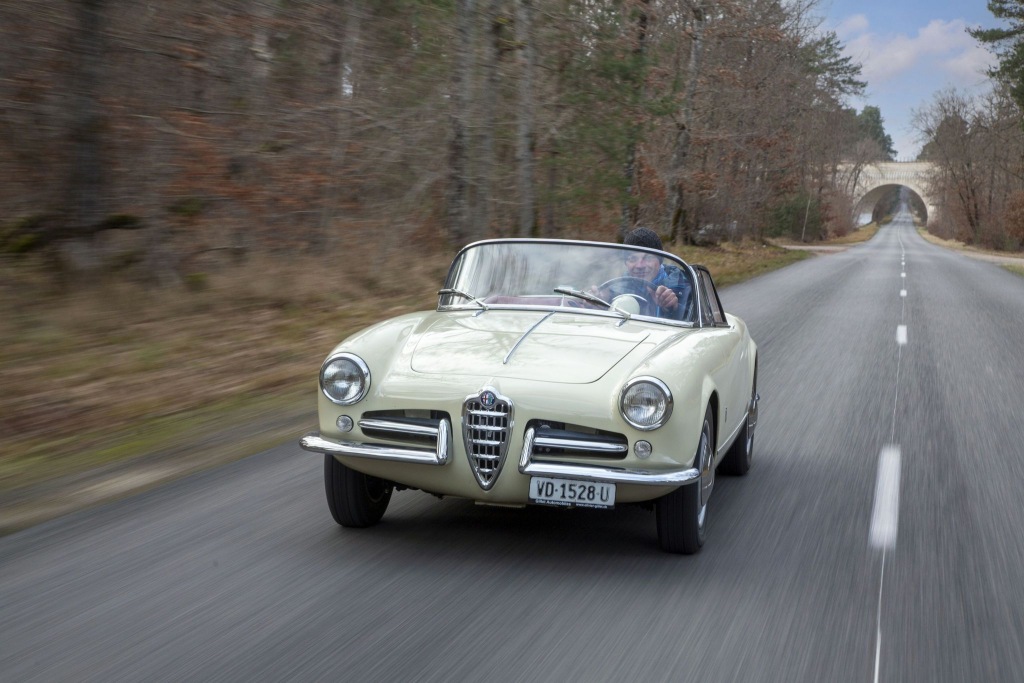
Par OSENAT à Fontainebleau le 21/04/2024 : 1954 Alfa Romeo Guilietta Spider Prototype Pininfarina
Châssis AR 1495 00003
Moteur AR 1493 00002
Titre de circulation Suisse
Importation temporaire sur le territoire de l’union européenne.
- Une des plus anciennes Guilietta Spider
- Spécificités uniques
- Modèle exceptionnel
- Certificat Alfa Romeo
- Matching Numbers
L’histoire de cette voiture est indissociablement liée à Max Hoffman et sa société Hoffman Motor Cars. Cet entrepreneur autrichien de génie est à l’origine des Mercedes Benz 300 SL, BMW 507, Porsche 356 Speedster et de l’Alfa Romeo Guilietta Spider.
Au début des Années 1950, la société Hoffman Motor Cars, située à New York devient l’importateur officiel d’Alfa Romeo aux Etats Unis, immédiatement il perçoit le potentiel d’un roadster dérivé de la future Guilietta Sprint qui est sur le point d’être présentée.
Fin 1953 donc, Alfa Romeo en collaboration étroite avec Hoffman, travaillent sur le développement d’un roadster basé sur le châssis de la Guilietta Sprint. Le développement sera confié à Rudolf Hruska, l’ingénieur de la marque déjà en charge du projet Sprint. Très rapidement, un châssis motorisé est prêt. Il est numéroté AR 1495 0000. Celui-ci ne sera jamais carrossé. Hruska contacte les carrossiers turinois Bertone et Pininfarina pour leur confier chacun deux châssis. Charge à eux de réaliser leurs propositions pour la future « Guilietta Spider ». Pininfarina recevra les châssis 003 et 002 et produira sur ces deux châssis, deux études de style non fonctionnelles.
Après une validation du dessin par Max Hoffman, le châssis 0003 est renvoyé à Turin cette fois-ci pour la construction d’un prototype fonctionnel.
C’est cette voiture que nous vous présentons aujourd’hui. Après avoir été recarrossé, notre châssis effectuera 4 allers-retours entre New York et Turin pour la validation finale, Pininfarina remporte ainsi le contrat face à Bertone.
Le 22 février 1955, le châssis AR 1495 00003 quitte définitivement Turin, indiqué vendu à Hoffman Motor Cars dans les livres de l’usine. La voiture est alors équipée de son moteur actuel et peinte dans la teinte « Ivorio ». Le dessin exceptionnel de cette Voiture sera finalement modifié pour la production en série car Pininfarina avait développé entre temps, d’autres prototypes aux spécificités plus compatibles avec une production en grande série.
Bien que différent du Guilietta Spider de série, la châssis 003 sera utilisé par Hoffman pour une tournée des salons Américains. Après le salon de l’automobile de Miami 1955, la voiture sera finalement vendue à Henry Wessel. Celui-ci la conservera seulement 1 an avant de la céder à Bruce Beckwith, celui-ci comprit immédiatement l’importance de la voiture et ne l’utilisa que très partiellement jusqu’en 1959. Cette année-là, il entreprit quelques travaux sur la voiture, démonta le pare-brise spécifique et recouvris la carrosserie d’après.
A cette date, la voiture sera partiellement remontée et stockée. En 1989, la voiture est acquise par Tom Zat qui exposa sa voiture à l’Alfa Heaven Museum.
En 2000, Gérald Bugnon fit l’acquisition de ce véhicule exceptionnel. La voiture est alors telle qu’elle avait été acquise par Tom Zat 11 ans plus tôt.
Importée en suisse directement après son acquisition, une restauration d’envergure sera entreprise en Italie. Une fois restaurée, elle rejoindra dans la collection, l’éternelle rivale, le prototype Bertone.
Jusqu’à très récemment, la voiture participera à de nombreux événements du club Alfa Romeo Suisse mais aussi d’autres grands clubs européens.
Modèle Unique aux spécifications exceptionnelles, ce prototype présente un dessin d’une pureté jamais égalée, faisant penser par certains aspects à un autre chef d’œuvre de Pininfarina, la Lancia Aurelia B24 Spider America.
1954 Alfa Romeo Guilietta Spider Prototype Pininfarina
Chassis AR 1495 00003
Engine AR 1493 00002
Swiss registration document
Temporary import into the European Union.
- One of the oldest Guilietta Spiders
- Unique features
- Exceptional model
- Alfa Romeo certificate
- Matching Numbers
The history of this car is inextricably linked to Max Hoffman and his company Hoffman Motor Cars. This Austrian entrepreneur of genius was behind the Mercedes Benz 300 SL, BMW 507, Porsche 356 Speedster and the Alfa Romeo Guilietta Spider.
In the early 1950s, Hoffman Motor Cars, based in New York, became Alfa Romeo's official importer in the United States, and immediately saw the potential of a roadster derived from the future Guilietta Sprint, which was about to be presented.
At the end of 1953, Alfa Romeo worked closely with Hoffman to develop a roadster based on the Guilietta Sprint chassis. Development was entrusted to Rudolf Hruska, the Alfa Romeo engineer already in charge of the Sprint project. A motorised chassis was soon ready. It was numbered AR 1495 0000. It was never bodied. Hruska contacted the Turin coachbuilders Bertone and Pininfarina to entrust them with two chassis each. It was up to them to produce their proposals for the future Guilietta Spider. Pininfarina received chassis 003 and 002 and produced two non-functional styling studies on these two chassis.
After Max Hoffman had validated the design, chassis 0003 was sent back to Turin, this time to build a functional prototype.
This is the car we are presenting to you today. After being rebodied, our chassis made 4 return trips between New York and Turin for final validation, Pininfarina winning the contract over Bertone.
On 22 February 1955, chassis AR 1495 00003 left Turin for good, and was sold to Hoffman Motor Cars in the factory's books. The car was fitted with its current engine and painted in "Ivorio". The exceptional design of this car would eventually be modified for series production, as Pininfarina had in the meantime developed other prototypes with specifications more compatible with mass production.
Although different from the production Guilietta Spider, the 003 chassis was used by Hoffman for a tour of American motor shows. After the 1955 Miami Motor Show, the car was finally sold to Henry Wessel. He kept it for only 1 year before handing it over to Bruce Beckwith, who immediately understood the importance of the car and used it only very sparingly until 1959. In that year, he undertook some work on the car, removing the special windscreen and re-covering the bodywork.
The car was then partially reassembled and stored. In 1989, the car was acquired by Tom Zat, who exhibited it at the Alfa Heaven Museum.
In 2000, Gérald Bugnon acquired this exceptional vehicle. The car is now as it had been acquired by Tom Zat 11 years earlier.
Imported into Switzerland immediately after its purchase, it underwent a major restoration in Italy. Once restored, it would join its eternal rival, the Bertone prototype, in the collection.
Until very recently, the car took part in numerous events organised by the Alfa Romeo Switzerland club and other major European clubs.
A unique model with exceptional specifications, this prototype boasts a design of unparalleled purity, reminiscent in some respects of another Pininfarina masterpiece, the Lancia Aurelia B24 Spider America. Voir le lot
Estimé 300 000 € - 350 000 €
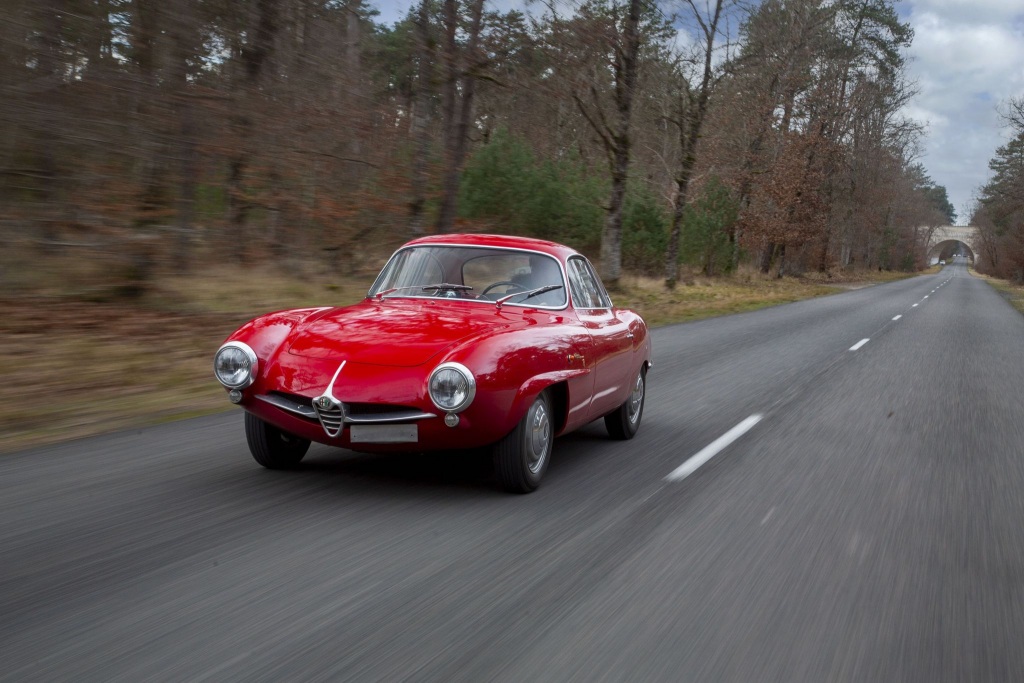
Par OSENAT à Fontainebleau le 21/04/2024 : 1959 Alfa Romeo Giulietta Sprint Speciale 750 SS “Muso Basso” by Bertone
Série : AR10120 00048
Moteur : AR00120 0017
Titre de circulation Suisse
Véhicule en importation temporaire au sein de l’UE
Certificat Alfa Romeo
- Rare version Muso Basso
- Restauration ancienne de qualité
- Une des rares SS ayant eu un Palmarès.
La collaboration entre Alfa Romeo et Bertone donnera naissance à des projets exceptionnels grâce à son dessinateur de génie Franco Scaglione. Les Projet « BAT » (Berlina Aerodinamica Tecnica) et « Disco Volante » donneront naissance à la « Sprint Speciale » sous forme de prototype en 1957 puis en série à partir de 1959. Dès 1960, la voiture évolue pour se conformer aux normes américaines.
La première série, type 750 SS fut produite à environ 100 exemplaires pour obtenir l’homologation en vue d’un usage en compétition. On distingue cette série par son absence de pare-chocs et par son nez surnommé « Muso Basso ».
L’exemplaire que nous vous présentons, le 48e produit, fut livré neuf par la concession de Porto au Portugal sous l’immatriculation OP 21-55 le 19 aout 1959. Son premier propriétaire n’est autre que Manuel Nogueira Pinto, célèbre pilote portugais des années soixante. Dès réception de son automobile, il s’engage dans plusieurs compétitions. Il remportera une seconde place lors de la course de Vila do Conde en 1959, engagé sous le numéro 11 (cf photographie).
Très rapidement, il échange son Alfa Romeo et un camion d’assistance au pilote Frederico José Carlos Themudo (dit Fritz d’Oray) contre une Ferrari 250 GT.
Fin 1959, Fritz d’Oray qui est alors pilote de F1 chez Maserati, est engagé par la Scuderia Sérénissime sur une 250 GT SWB pour courir les 24 Heures du mans 1960.
N’ayant jamais couru au Mans, il décide de s’entrainer avant les qualifications et le fait avec cette Alfa Romeo Guilietta SS. Blessé avec sa Ferrari lors des qualifications, il passe plusieurs mois à l’hôpital.
L ’Alfa Romeo, restée sur le parking se retrouve alors en fourrière. Fritz d’Oray conservera sa Sprint Special jusqu’au milieu des années 60. Cette Guilietta SS, connaitra ensuite un autre propriétaire portugais.
En 1980, la voiture change de mains et devient la propriété d’un amateur de Lisbonne, José Augusto Xavier Moreira. Celui-ci la conservera 10 ans.
En 1990, notre Guilietta SS quitte pour la première fois le Portugal. Elle est acquise par le docteur Richard Schimmer résidant à Düsseldorf. Celui-ci entamera une restauration de la voiture, étalée sur plus de 10 ans.
En 2004, Gerald Bugnon fait l’acquisition de l’automobile, alors inachevée, par l’intermédiaire du Garage Vetter. Celui-ci, se chargera de restaurer la mécanique, laissée intacte en Allemagne et d’achever les travaux débutés. En 2006, les travaux sont terminés. Au total plus de 90 000 CHF seront dépensés pour obtenir un état concours, sellerie, accastillage, mécanique, trains roulants, tout sera revu pour arriver au résultat actuel. Aujourd’hui quasiment 20 ans après la fin du chantier, la voiture reste dans un très bel état, témoignant de la qualité des travaux effectués.
Ce chef d’œuvre de l’automobile représente l’apogée du design Bertone des années 50 !
1959 Alfa Romeo Giulietta Sprint Speciale 750 SS "Muso Basso" by Bertone
Series: AR10120 00048
Engine: AR00120 0017
Swiss registration
Vehicle temporarily imported into the EU
Alfa Romeo certificate
- Rare Muso Basso version
- Quality restoration
- One of the few SS to have won a prize.
The collaboration between Alfa Romeo and Bertone gave rise to some exceptional projects thanks to its genius designer Franco Scaglione. The "BAT" (Berlina Aerodinamica Tecnica) and "Disco Volante" projects gave rise to the "Sprint Speciale" in prototype form in 1957 and then in series production from 1959. From 1960 onwards, the car evolved to comply with American standards.
Around 100 of the first series, the 750 SS, were produced to obtain homologation for use in competition. This series can be distinguished by its lack of bumpers and its nose nicknamed 'Muso Basso'.
The car we are presenting here, the 48th to be produced, was delivered new from the Porto dealership in Portugal under the registration number OP 21-55 on 19 August 1959. Its first owner was none other than Manuel Nogueira Pinto, the famous Portuguese racing driver of the 1960s. As soon as he received his car, he entered several competitions. He took second place in the Vila do Conde race in 1959, entered under number 11 (see photograph).
He soon swapped his Alfa Romeo and an assistance truck for the driver Frederico José Carlos Themudo (known as Fritz d'Oray) for a Ferrari 250 GT.
At the end of 1959, Fritz d'Oray, then an F1 driver with Maserati, was hired by the Serenissima Scuderia to drive a 250 GT SWB in the 1960 Le Mans 24 Hours.
Having never raced at Le Mans, he decided to train before qualifying and did so with this Alfa Romeo Guilietta SS. Injured in the Ferrari during qualifying, he spent several months in hospital.
The Alfa Romeo was left in the car park and then impounded. Fritz d'Oray kept his Sprint Special until the mid-60s. This Guilietta SS then had another Portuguese owner.
In 1980, the car changed hands and became the property of a Lisbon enthusiast, José Augusto Xavier Moreira. He kept it for 10 years.
In 1990, our Guilietta SS left Portugal for the first time. It was acquired by Dr Richard Schimmer, who lived in Düsseldorf. He undertook a restoration of the car that lasted more than 10 years.
In 2004, Gerald Bugnon acquired the then unfinished car through Garage Vetter. Vetter took on the task of restoring the mechanics, which had been left intact in Germany, and completing the work that had already begun. The work was completed in 2006. In all, more than CHF 90,000 was spent to bring the car up to its current state, with the upholstery, fittings, mechanicals and running gear all being overhauled. Today, almost 20 years after the work was completed, the car is still in very good condition, a testament to the quality of the work carried out.
This automotive masterpiece represents the pinnacle of Bertone design in the 1950s! Voir le lot
Estimé 180 000 € - 250 000 €
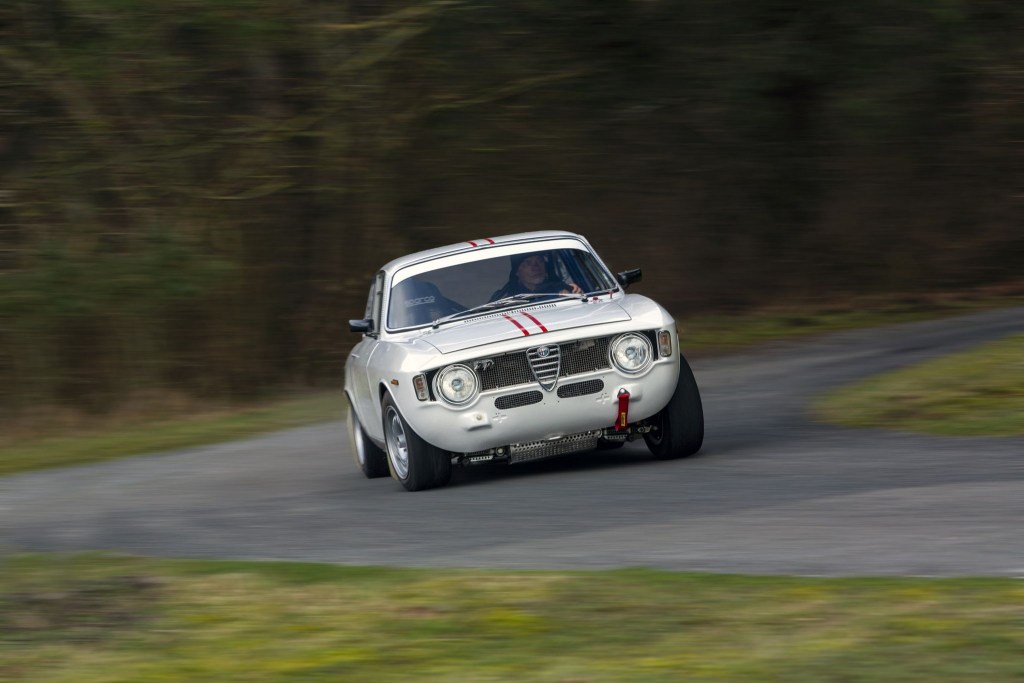
Par OSENAT à Fontainebleau le 21/04/2024 : 1965 ALFA ROMEO Giulia Sprint GTA
Châssis AR613276
Moteur AR 00 559 05026
Sans titre de Circulation
Passeport FIA
169 chevaux au banc
Certificat Alfa Romeo
Introduite en 1965, la GTA était la version de compétition officielle de la Giulia Sprint GT et était produite en variantes de route (stradale) et de course (corsa). Cette dernière, relevait de la responsabilité du département compétition de l'usine Autodelta.
La GTA se différenciait par ses panneaux de carrosserie en aluminium, ses vitres latérales et arrières en plexiglas et ses aménagements intérieurs allégés.
En conséquence, la GTA pèse 200 kilogrammes de moins qu’une Sprint GT. Le quatre cylindres classique à double arbre à cames d'Alfa de 1 570 cm3 a subi d'importantes modifications pour la GTA, l'angle entre les soupapes étant réduit de 90 à 80 degrés et la taille de ces dernières considérablement augmentée. Comme il n'y avait plus de place entre eux pour une bougie centrale, on a opté pour un double allumage. En version route, le moteur révisé produisait 115 ch avec jusqu'à 150 chevaux disponibles en version course.
La GTA a fait ses débuts en course le 20 mars 1966 à Monza où Andrea de Adamich et Teodoro Zeccoli ont triomphé dans la course de quatre heures du Jolly Club.
Dès lors, les GTA préparées par Autodelta connurent un succès exceptionnel, remportant le Championnat d'Europe des voitures de tourisme trois années de suite, de 1966 à 1968. Afin de permettre l'homologation, 500 voitures ont été fabriquées pour la course et la route.
L’exemplaire que nous vous proposons est une des 500 GTA Stradale fabriquées par Alfa Romeo. Sortie d’usine le 7 juillet 1965, elle fut livrée le 30 aout à la concession Avellino en Italie. Elle était alors Biancospino avec un intérieur en skaï Nero Fumo.
Nous retrouvons ensuite sa trace en 1988 en Suisse, elle appartient alors à Hans Ulrich Kohler. La voiture se voit alors délivrer un carnet de passage en douanes FIA délivré par l’Automobile Club Suisse. Elle est alors comme beaucoup repeinte en rouge. En 1989, la voiture change de mains, elle est alors acquise par Helmut Kuen, résidant à St Moritz. Ceux-ci feront restaurer l’automobile par l’atelier du Club del Portello, spécialiste de la marque (pas de factures au dossier). Dans les années 90, la voiture sera acquise par Gerd F. Klein, amateur allemand. En 1999, elle passe entre les mains de Patrick Koller, collectionneur allemand qui la conservera jusqu’en 2006.
Cette année-là, la voiture est acquise par Gérald Bugnon. Elle est alors peinte en Jaune. Puis elle intègre son team pour être engagée sur plusieurs rallyes du championnat VHC dont ceux de l’Acropole et de San Marin.
En 2009, la voiture est reconfigurée pour un usage piste. Elle est alors engagée aux 6 Heures de Spa en 2010. Courant 2015, une restauration est entreprise. Tout est revu aux spécifications FIA. Un nouveau moteur est développé. Lors de son passage au banc en juillet 2015, celui-ci développait 169 chevaux.
Après ce chantier, la voiture sera engagée à plusieurs rallyes en 2016, 2018 et 2020.
En 2021, le passeport technique FIA de la voiture est renouvelé. Valide jusqu’en 2030, celui-ci permettra au futur propriétaire d’engager sa voiture au sein des meilleurs évènements mondiaux.
Avec une préparation de qualité, cette GTA est une véritable machine de course dont l ’efficacité n’est plus à prouver.
1965 ALFA ROMEO Giulia Sprint GTA
Chassis AR613276
Engine AR 00 559 05026
No registration document
FIA passport
169 hp on test bench
Alfa Romeo certificate
Introduced in 1965, the GTA was the official competition version of the Giulia Sprint GT and was produced in road (stradale) and racing (corsa) variants. The latter was the responsibility of the Autodelta factory's racing department.
The GTA was distinguished by its aluminium body panels, Plexiglas side and rear windows and lighter interior fittings.
As a result, the GTA weighed 200 kilograms less than a Sprint GT. Alfa's classic 1,570 cm3 twin-cam four-cylinder engine underwent significant modifications for the GTA, with the angle between the valves reduced from 90 to 80 degrees and the size of the valves considerably increased. As there was no longer room between them for a central spark plug, a dual ignition system was opted for. In road version, the revised engine produced 115 bhp, with up to 150 bhp available in race version.
The GTA made its racing debut on 20 March 1966 at Monza, where Andrea de Adamich and Teodoro Zeccoli triumphed in the Jolly Club four-hour race.
From then on, the GTAs prepared by Autodelta enjoyed exceptional success, winning the European Touring Car Championship three years in a row, from 1966 to 1968. To enable homologation, 500 cars were built for racing and road use.
The car on offer is one of the 500 GTA Stradale built by Alfa Romeo. It left the factory on 7 July 1965 and was delivered to the Avellino dealership in Italy on 30 August. At the time, it was in Biancospino with a Nero Fumo leatherette interior.
It was then traced back to Switzerland in 1988, when it was owned by Hans Ulrich Kohler. The car was issued with an FIA carnet de passage en douanes by the Automobile Club Suisse. Like many cars, it was repainted in red. In 1989, the car changed hands and was acquired by Helmut Kuen, who lived in St Moritz. They had the car restored by the Club del Portello workshop, a specialist in the make (no invoices on file). In the 1990s, the car was acquired by Gerd F. Klein, a German enthusiast. In 1999, it passed into the hands of Patrick Koller, a German collector who kept it until 2006.
That year, the car was acquired by Gérald Bugnon. It was then painted Yellow. It then joined his team to compete in a number of VHC championship rallies, including the Acropolis and San Marino.
In 2009, the car was reconfigured for track use. It was entered in the Spa 6 Hours in 2010. During 2015, a restoration was undertaken. Everything was brought up to FIA specifications. A new engine was developed. When it passed the test bench in July 2015, it developed 169 bhp.
After this work, the car will be entered in several rallies in 2016, 2018 and 2020.
In 2021, the car's FIA technical passport was renewed. Valid until 2030, it will enable the future owner to enter the car in the world's top events.
With its high quality preparation, this GTA is a real racing machine whose efficiency needs no further proof. Voir le lot
Estimé 25 000 € - 45 000 €
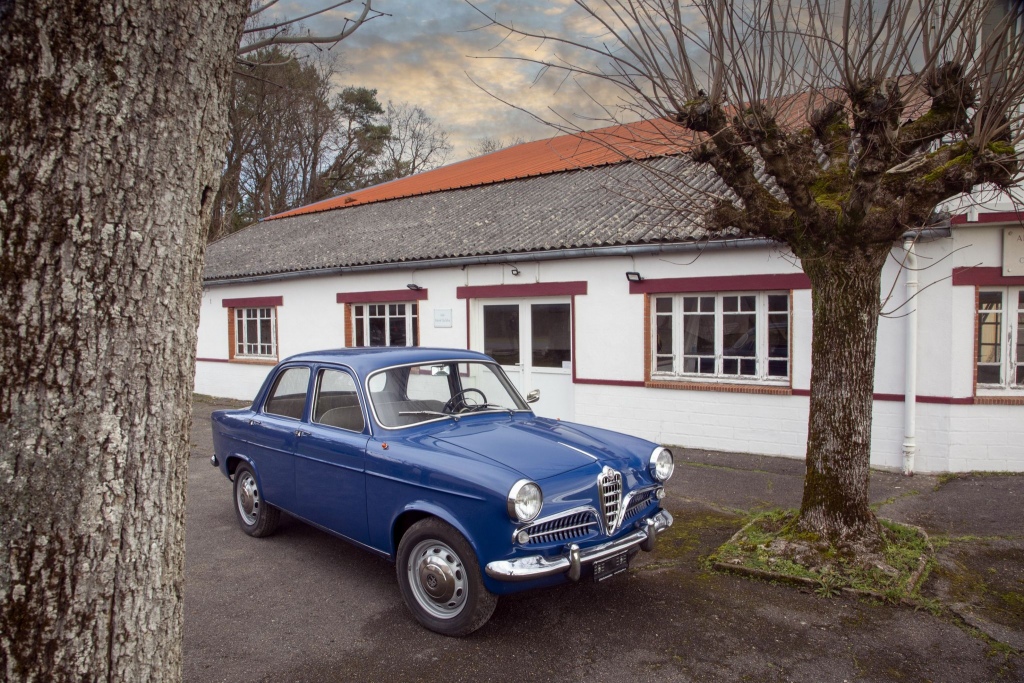
Par OSENAT à Fontainebleau le 21/04/2024 : 1958 ALFA ROMEO GIULIETTA TI TYPE 753
Numéro de série AR 1468 03980
Numéro de moteur AR 1315 84188
Titre de circulation Suisse
Importation temporaire au sein de l’UE
- Restaurée au cours des années 2000
- Certificat Alfa Romeo
- Même propriétaire depuis 22 ans
- Une des premières berlines sportives
- Eligible dans de nombreux événements
25 000 /45 000 €
Née en 1955, la Giulietta est considérée, chez Alfa Romeo, comme la lumière au bout du tunnel tant l'immédiate après-guerre fut compliqué pour la firme au Biscione. Conçue autour de son moteur, cette petite mais élégante berline quatre portes était bien née, qu'il s'agisse de ses qualités routières comme de sa finition pour un prix compétitif. La version TI pour Tourisme Internazionale fut présentée en 1957. Elle fut équipée d'un 1300 cm3 en aluminium avec double arbres à cames en tête. Ses 65 chevaux lui permettaient alors d'atteindre près de 160 km/h.
Elle s'est notamment illustrée dans les célèbres épreuves du Tour de France Automobile, des Mille Miglia, du Monte Carlo et autres...
L’exemplaire que nous présentons, fut livré neuf en France au sein de la concession parisienne de la marque le 24/04/1958 dans sa configuration actuelle : Blue Elvezia avec la sellerie et les garnitures pied de poule.
On retrouve sa trace en 1970 en Haute Garonne lorsqu’elle est immatriculée 188 QF 31. Elle restera dans la région toulousaine, jusqu’en 1990.
Elle est ensuite acquise par un amateur de Charente Maritime qui la conservera jusqu’en 2001.
Monsieur Bugnon acquiert cette Giulietta en juillet 2001, la voiture se trouve alors dans un mauvais état.
Dès le mois de juillet 2001, la restauration est entreprise au sein des ateliers Mario Galbiatti à Arese, celui-ci restaurera l’ensemble de la voiture exceptée la mécanique pour un total de 25 000 €. Le moteur et les trains roulants seront confiés aux ateliers Calderoni qui le referont pour un total de plus de 18 000 €.
Enfin, en 2015, une grosse révision générale sera effectuée pour un total de plus de 5000 €. Depuis la voiture a été régulièrement révisée. Matching Numbers et Matching colors, cette Giulietta se présente dans un bel état, plus de 20 ans après la fin de sa restauration.
La voiture fêtant cette année ses 70 ans, est une des plus belles représentations des berlines Giulietta disponible sur le marché.
1958 ALFA ROMEO GIULIETTA TI TYPE 753
Serial number AR 1468 03980
Engine number AR 1315 84188
Swiss registration document
Temporary import into the EU
- Restored in 2000
- Alfa Romeo certificate
- Same owner for 22 years
- One of the first sports saloons
- Eligible for many events
25 000 /45 000 €
Launched in 1955, the Giulietta is considered by Alfa Romeo to be the light at the end of the tunnel, such was the complexity of the immediate post-war period for the Biscione company. Designed around its engine, this small but elegant four-door saloon was well born, both in terms of its road qualities and its finish at a competitive price. The TI version (for Tourisme Internazionale) was presented in 1957. It was equipped with a 1300 cm3 aluminium engine with twin overhead camshafts. Its 65bhp enabled it to reach speeds of almost 160km/h.
It went on to compete in the famous Tour de France Automobile, the Mille Miglia, the Monte Carlo and other events...
The car we are presenting was delivered new to the brand's Paris dealership on 24/04/1958 in its current Blue Elvezia configuration, complete with upholstery and houndstooth trim.
It was registered 188 QF 31 in Haute Garonne in 1970. It remained in the Toulouse region until 1990.
It was then acquired by an enthusiast in Charente Maritime, who kept it until 2001.
Mr Bugnon acquired this Giulietta in July 2001, when the car was in a poor state of repair.
Restoration work began in July 2001 at the Mario Galbiatti workshops in Arese, where the entire car was restored, with the exception of the mechanical parts, at a total cost of €25,000. The engine and running gear will be entrusted to the Calderoni workshops, which will carry out a complete overhaul for a total of more than €18,000.
Finally, in 2015, a major general overhaul was carried out for a total of more than €5,000. Since then, the car has been regularly serviced. Matching numbers and colours, this Giulietta is in beautiful condition, more than 20 years after the end of its restoration.
Celebrating its 70th birthday this year, the car is one of the finest examples of the Giulietta saloon available on the market. Voir le lot
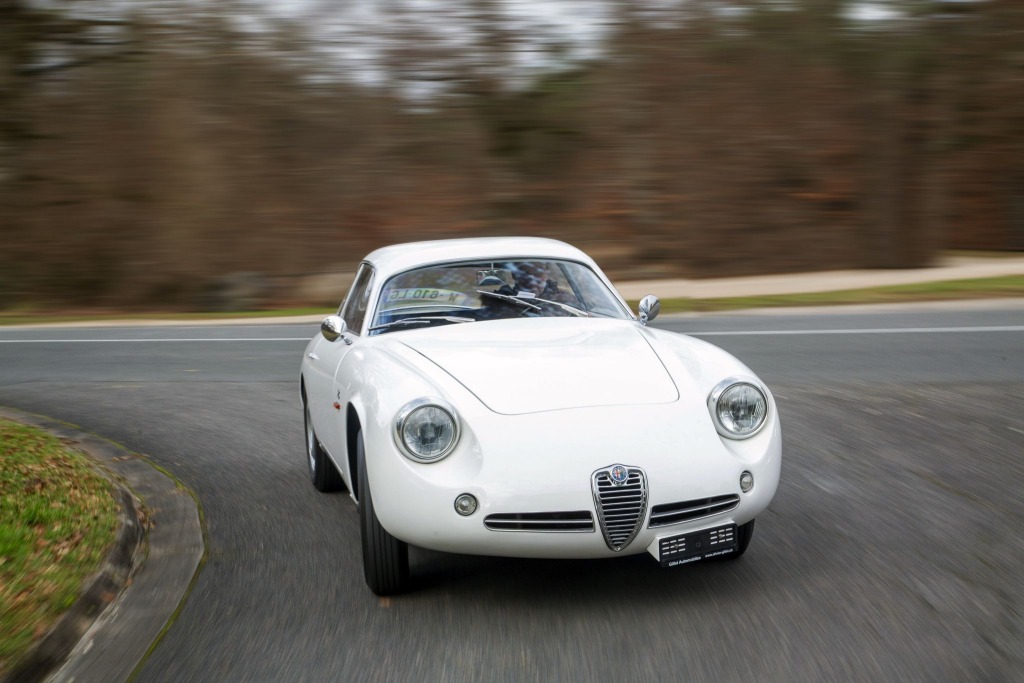
Estimé 600 000 € - 800 000 €
Par OSENAT à Fontainebleau le 21/04/2024 : 1963 Alfa Romeo SZ Coda Tronca
Châssis AR 126 00213
Moteur 00120 0820
Titre de circulation Suisse
Importation temporaire au sein de l’Union Européenne
- Une des dernières SZ produites
- Seulement 44 exemplaires produits
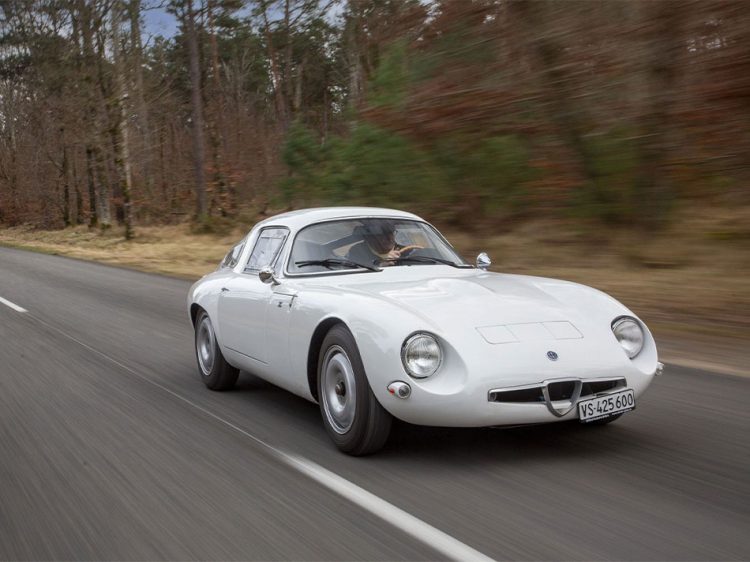
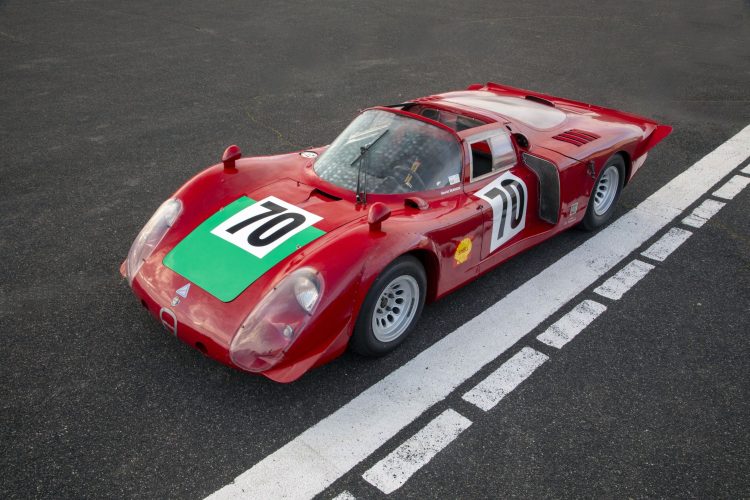
L’histoire de la SZ Coda Tronca est née d’un accident. En 1961, le pilote Francesco De Leonibus fait recarrossé par Micheloti sa SZ à la suite d’un accident, celui-ci réalise une ligne plus longue et effilée. Sur le circuit de Monza, le pilote Francesco De Leonibus enregistrera une vitesse de pointe époustouflante (222,22 km/h). À la suite de cet exploit, Zagato se mit aussitôt à la conception d’une nouvelle carrosserie pour la SZ.
Il redessine la carrosserie d’abord en allongeant le museau ainsi que la queue (l’arrière), puis en modifiant également le pavillon et enfin, pour obtenir une forme encore plus aérodynamique, il décide de tronquer l'arrière de la voiture, en s’appuyant sur les théories de l’ingénieur aérodynamicien allemand Wunibald Kamm.
Zagato, n’étant pas équipé d’une soufflerie, réalise une série de tests sur autoroutes, en se servant des pierres angulaires comme référence, et du fidèle designer Ercole Spada comme chronométreur assis au sol.
Le résultat final est prêt quelques mois plus tard et Zagato lui-même engage la nouvelle SZ au Grand Prix de Monza en 1961 remportant la course, devant la SZ revue par Micheloti. Pour donner suite à ce succès, la production de la deuxième série de SZ est lancée. Sur le plan mécanique la seconde série reprend tous les attributs de la première SZ. Différence notable, malgré l’allongement de la voiture, elle perd 15 kg et affiche désormais un poids contenu à 840 kg. Grâce à ces améliorations, la vitesse de pointe dépasse désormais largement les 200 km/h, flirtant avec les 215 km/h.
L’exemplaire que nous vous présentons, est sorti des ateliers Zagato le 7 décembre 1962. Le 15 janvier 1963, la voiture est livrée par l’importateur Hollandais Louwman & Parqui situé à Leidschendam. Il s’agit d’un des rares châssis équipé dès l’origine de freins à disques à l’avant.
La voiture passe ensuite entre les mains du collectionneur et concessionnaire Roy Karsten, grand amateur de la marque. Celui-ci l’exposera dans son Showroom à Noordwijk pendant une dizaine d’années, participant dans le même temps à de nombreux évènements dont la commémoration des 80 ans d’Alfa Romeo en 1990. La voiture est alors peinte dans une teinte jaune pale.
Vers la fin des années 90, la SZ intègre la collection de Gérald Bugnon, celui-ci roulera avec quelques années avant de débuter une restauration majeure, désirant intégrer sa SZ au sein de son écurie de VHC personnelle il Biscione Corsa Romand. Le chantier est confié aux ateliers Dante, ceux-ci vont construire une nouvelle carrosserie pour la SZ suivant les plans de Zagato. La carrosserie originelle, conservée, sera remise à l’acquéreur. La mécanique, est entièrement revue et perfectionnée tout comme les trains roulants.
L’automobile participera à quelques événements avant d’être revue pour un usage plus orienté vers la régularité et les balades.
C’est une voiture charnière dans l’histoire de Zagato, apportant des innovations qui seront reprises pour la TZ.
Qualités routières exceptionnelles et dessin mythique, voilà deux raisons d’acquérir cette superbe Alfa Romeo SZ.
1963 Alfa Romeo SZ Coda Tronca
Chassis AR 126 00213
Engine 00120 0820
Swiss registration document
Temporary import into the European Union
- One of the last SZs produced
- Only 44 produced
The story of the SZ Coda Tronca began with an accident. In 1961, driver Francesco De Leonibus had his SZ re-bodied by Micheloti following an accident, and the latter created a longer, tapered line. On the Monza circuit, Francesco De Leonibus recorded a breathtaking top speed (222.22 km/h). Following this achievement, Zagato immediately set about designing a new body for the SZ.
He redesigned the body firstly by lengthening the muzzle and the tail (the rear), then by also modifying the roof and finally, to obtain an even more aerodynamic shape, he decided to truncate the rear of the car, based on the theories of the German aerodynamic engineer Wunibald Kamm.
Zagato did not have a wind tunnel, so he carried out a series of tests on the motorways, using the cornerstones as a reference and the faithful designer Ercole Spada as a timekeeper sitting on the ground.
The final result was ready a few months later, and Zagato himself entered the new SZ in the 1961 Monza Grand Prix, winning the race ahead of Micheloti's revised SZ. Following this success, production of the second series of SZs was launched. Mechanically, the second series retained all the attributes of the first SZ. The notable difference was that, despite the lengthening of the car, it lost 15 kg and weighed just 840 kg. Thanks to these improvements, the top speed is now well in excess of 200 km/h, flirting with 215 km/h.
The car we are presenting here left the Zagato workshops on 7 December 1962. On 15 January 1963, the car was delivered by Dutch importer Louwman & Parqui in Leidschendam. It was one of the few chassis equipped from the outset with front disc brakes.
The car then passed into the hands of collector and dealer Roy Karsten, a great fan of the marque. He exhibited the car in his showroom in Noordwijk for around ten years, and at the same time took part in numerous events, including the commemoration of Alfa Romeo's 80th anniversary in 1990. The car was painted in a pale yellow.
Towards the end of the 1990s, the SZ joined the collection of Gérald Bugnon, who drove it for a few years before embarking on a major restoration, wishing to integrate his SZ into his personal VHC team, il Biscione Corsa Romand. The work was entrusted to the Dante workshops, who built a new body for the SZ based on Zagato's plans. The original bodywork was retained and given to the buyer. The powertrain was completely revised and perfected, as were the running gear.
The car took part in a number of events before being redesigned for more regular and touring use.
It was a pivotal car in the history of Zagato, bringing innovations that would be carried over to the TZ.
Exceptional roadholding and a legendary design are just two of the reasons to buy this superb Alfa Romeo SZ. Voir le lot